How to Mix Furniture Styles for a Cohesive Home Design
Designing your dream space doesn’t mean sticking to one theme or era. In fact, some of the most inviting homes are the ones that mix furniture styles effortlessly by combining modern lines with vintage charm or blending old and new furniture to create something uniquely you.
If you’ve ever wondered how to mix furniture styles for a cohesive home design, this guide will walk you through practical tips, design principles, and examples that make your space feel curated, not chaotic.
What’s Inside
- Why Mixing Furniture Styles Works
- Start with a Design Vision
- Find Common Ground
- Blend Old and New Furniture with Style
- Play with Proportion and Scale
- Use Statement Pieces as Anchors
- Experiment with Textures and Layers
- Make It Personal
- Best Furniture Combinations for Living Room
- Tips for Mixing Furniture Styles Like a Pro
- Conclusion: How to Mix Furniture Styles for a Cohesive Home Design
Why Mixing Furniture Styles Works
Mixing furniture styles gives your home personality. Instead of looking like a showroom display, your space reflects your taste, travels, and memories. The trick is not to match everything but to create a cohesive home design where different pieces complement one another.
A well-balanced mix can make even the smallest condo or apartment feel more spacious and interesting, which is great news if you’re looking to shop for space-saving furniture in the Philippines, where limited space is often a challenge.
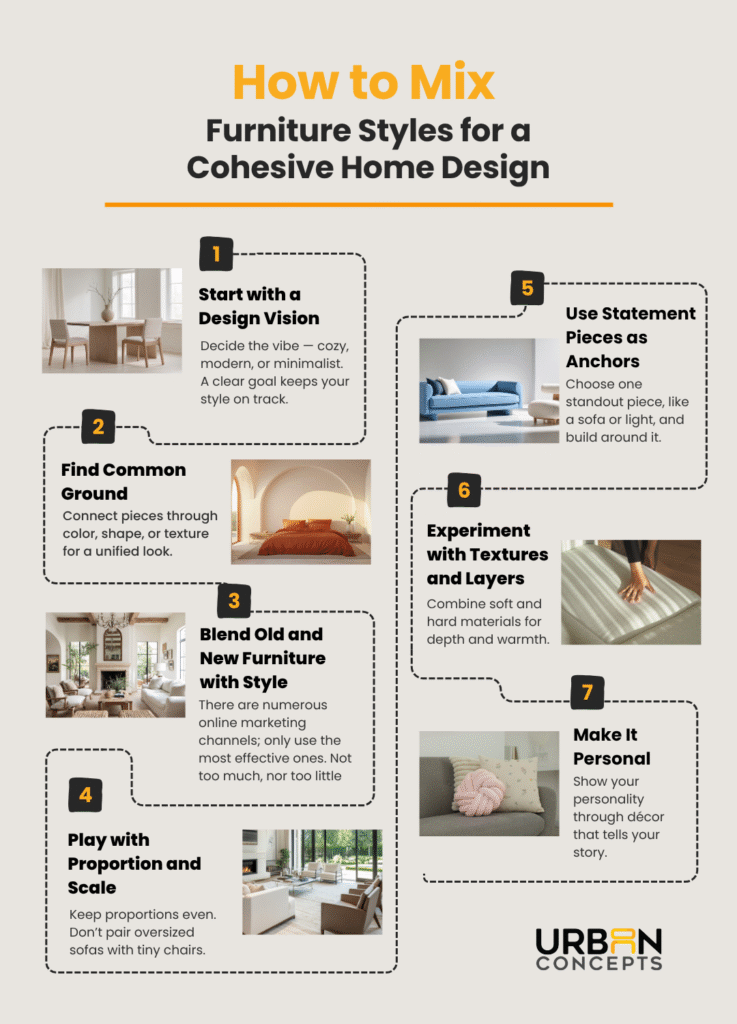
1. Start with a Design Vision
Before you start rearranging or shopping, picture how you want your space to feel. Do you want a warm and cozy vibe? Or a clean, minimalist space with a touch of vintage charm?
Having a vision helps you narrow down which furniture styles you’ll mix. For example, pairing Scandinavian furniture with rustic wood accents creates a laid-back look, while modern and traditional furniture combinations can make your home feel more balanced and timeless.
Related: Modern Furniture vs.Traditional Furniture: Which Suits Your Home?
Pro tip: Create a mood board with photos, textures, and color swatches. It helps visualize how everything will come together.
2. Find Common Ground
When you’re mixing furniture styles, it’s easy to get carried away. The key to pulling it off? Find a common thread that ties everything together.
● Stick to a Color Palette
Color is your best tool for balance. If your sofa is modern and sleek, but your coffee table has a vintage flair, unify them with similar tones. Neutrals like beige, gray, white, and wood are safe bets. Then, add pops of color through pillows or rugs.
Related: How to Choose the Perfect Furniture Color for Your Home
● Repeat Materials and Finishes
Whether it’s brass accents, natural rattan, or black metal legs, repeating materials helps your space feel intentional. For instance, a cohesive home design might include a mix of wood and metal furniture, as long as both appear more than once in the room.
● Balance Visual Weight
Too many chunky or ornate pieces can make a space feel heavy. Balance a bulky armchair with lighter, simpler furniture to keep your layout airy and visually pleasing.
3. Blend Old and New Furniture with Style
If you love both vintage charm and modern minimalism, blending old and new furniture can give your home the best of both worlds.
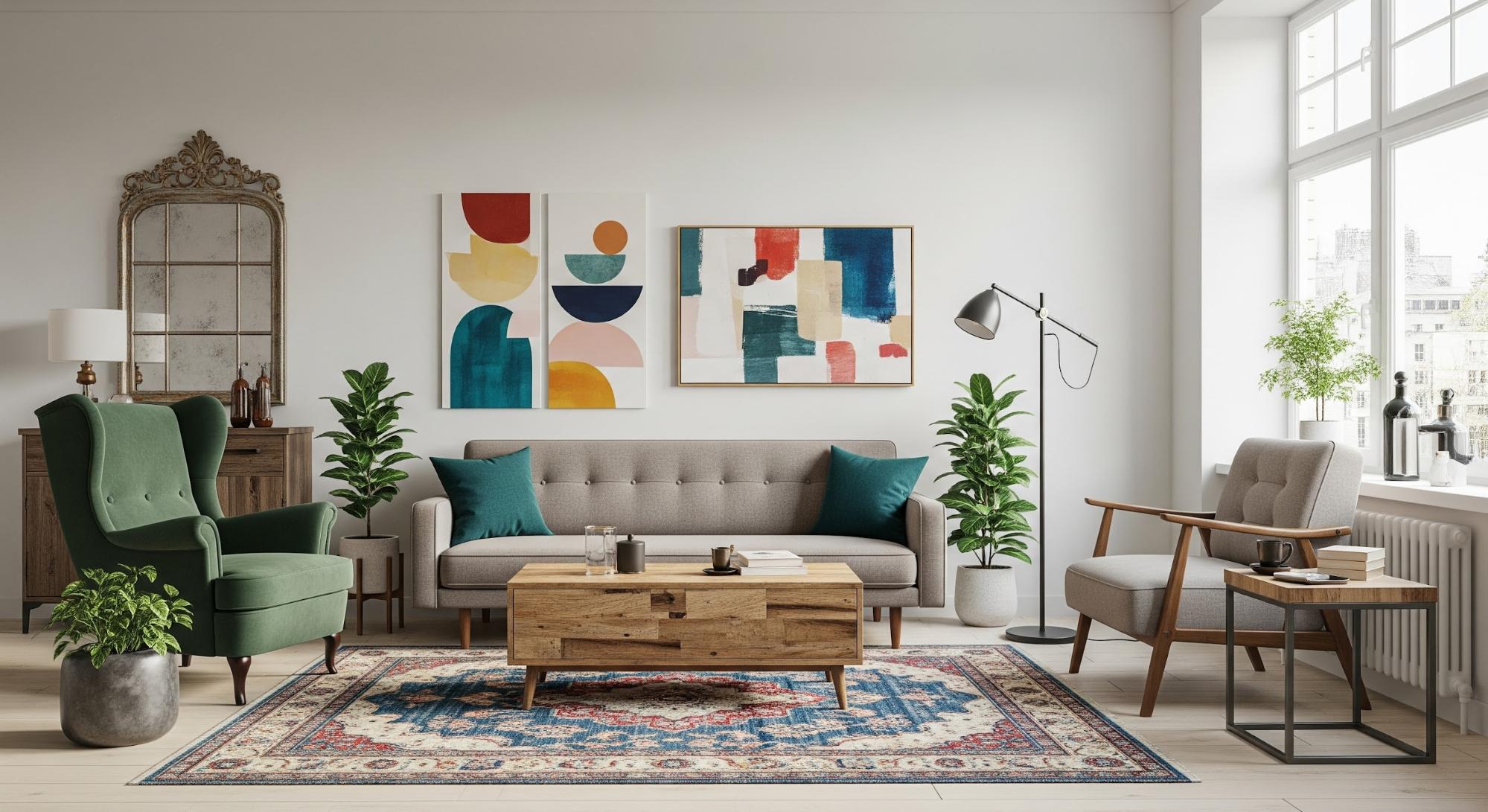
A sleek contemporary sofa can sit beautifully beside an antique wooden console — as long as the colors and textures don’t clash. Try adding a few “bridge” elements like throw pillows, lamps, or artwork that carry tones from both styles.
For example, an old wooden chest used as a coffee table can instantly ground a modern living room, while mid-century chairs can bring life to a more traditional setup.
4. Play with Proportion and Scale
Even when mixing furniture styles, size and proportion matter. You want each piece to feel like it belongs.
A huge sectional sofa placed beside tiny accent chairs can easily look mismatched. To balance the composition, pair it with slightly smaller armchairs instead. The same rule applies to height: vary your furniture pieces, such as tall bookshelves and low coffee tables, but keep them visually harmonious by repeating similar colors or textures.
Think of it as rhythm in design. It’s the flow that guides the eye around the room without making it feel cluttered.
5. Use Statement Pieces as Anchors
When learning how to match different furniture styles, it helps to have a focal point. A statement piece such as a bold sofa, a sculptural light fixture, or a reclaimed wood dining table can anchor the room.
Once you have your centerpiece, let the other pieces play supporting roles. If your couch is bright and modern, surround it with more neutral, traditional pieces to create contrast. This trick ensures your space looks intentional instead of accidental.
6. Experiment with Textures and Layers
Texture adds warmth and depth to mixed-style interiors. A balance of soft and hard surfaces, shiny and matte finishes, or natural and industrial materials creates harmony.
For instance:
- Pair a leather sofa with a woven rattan chair for that cozy tropical feel common in home furniture in the Philippines.
- Combine marble tabletops with wooden accents to soften the sleekness of modern design.
- Add linen curtains or cotton throws to make eclectic spaces feel grounded and comfortable.
These small touches make a big difference when you’re mixing furniture styles while keeping things cohesive.
7. Make It Personal
The best part about a mixed-style home is that it tells your story. Your grandmother’s dining chairs, a thrifted lamp, or that sleek table you found at a local shop — all these pieces can coexist beautifully when styled with intention.
Don’t worry about following strict rules. Instead, focus on creating a home that feels warm, balanced, and uniquely yours.
Best Furniture Combinations for Living Room
If you’re unsure where to start, here are a few tried-and-tested furniture combinations for living rooms that blend well together:
- Modern + Rustic: Clean-lined sofas with reclaimed wood tables or woven rugs.
- Mid-Century + Contemporary: Iconic shapes paired with minimalist décor.
- Traditional + Industrial: Classic wooden furniture meets metal or concrete details.
- Coastal + Scandinavian: Light woods, white upholstery, and airy accents.
The secret is to pick one dominant style (about 70%) and one or two supporting styles (30%) to avoid visual chaos.
Tips for Mixing Furniture Styles Like a Pro
Here are some quick, practical tips for mixing furniture styles without losing harmony:
- Keep scale consistent. Furniture of similar size and proportion feels more unified.
- Use repetition. Repeat a certain color, shape, or material throughout the room.
- Layer patterns carefully. Stick to one bold pattern, and let others be subtle.
- Add transitional pieces. Rugs, art, and lighting can bridge contrasting styles.
- Edit often. Step back and remove anything that disrupts flow or feels out of place.
Remember: mixing furniture styles is about confidence and curation, not perfection.
Conclusion: How to Mix Furniture Styles for a Cohesive Home Design
Learning how to mix furniture styles for a cohesive home design is about finding balance between contrast and comfort. If you’re blending old and new furniture, mixing modern and traditional pieces, or experimenting with colors and textures, focus on creating harmony that feels effortless and personal. In the end, the best homes aren’t perfectly matched; they’re perfectly balanced.
Looking to upgrade your interiors? Shop for affordable home furniture in the Philippines and discover stylish options for modern living.