Bar Stools vs. Dining Chairs: Which Is Right for Your Space?
Choosing between bar stools and dining chairs might seem simple at first—until you start measuring your space, considering comfort, and thinking about how you’ll actually use the area every day. Suddenly, it’s not just about style. Height, function, traffic flow, and even how long you plan to sit all come into play.
If you’re furnishing a condo, upgrading your kitchen island, or setting up a new dining area, this guide breaks down the difference between bar stools and dining chairs, when each option works best, and how to pick the right fit for your space and lifestyle.
Let’s get straight to it.
What’s Inside
- Understanding the Difference Between Bar Stools and Dining Chairs
- When to Choose Bar Stools Over Dining Chairs
- When to Choose Dining Chairs Over Bar Stools
- How to Choose Between Bar Stools and Dining Chairs
- Bar Stools vs Dining Chairs: Pros and Cons
- Cost Considerations
- Common Mistakes to Avoid
- Bar Stools vs Dining Chairs: Which One Is Right for You?
- Final Thoughts on Bar Stools vs Dining Chairs
Understanding the Difference Between Bar Stools and Dining Chairs
Before deciding, it helps to break down the basics.
Height and Table Compatibility
The biggest and most practical difference between bar stools and dining chairs is height.
- Standard dining chairs are designed for tables around 28–30 inches high.
- Counter height bar stools typically pair with surfaces around 34–36 inches.
- Bar-height stools are even taller, usually for 40–42 inch counters.
If you’re furnishing a kitchen island or breakfast counter, traditional dining chairs simply won’t work. On the other hand, placing tall stools at a standard dining table will look awkward, and feel uncomfortable.
So the first question in how to choose between bar stools and dining chairs is simple: What’s the height of your surface?
Comfort and Back Support
Dining chairs are generally built for longer meals. They usually have:
- Full backrests
- Wider seats
- Sometimes armrests
- Upholstered options
Bar stools, especially minimalist designs, may have:
- Low backs or no backs
- Smaller seat surfaces
- Footrests for balance
If your space is where family dinners stretch for hours, dining chairs often win in comfort. However, if you’re going for quick breakfasts, casual coffee breaks, or entertaining guests, stools work beautifully.
Space and Visual Impact
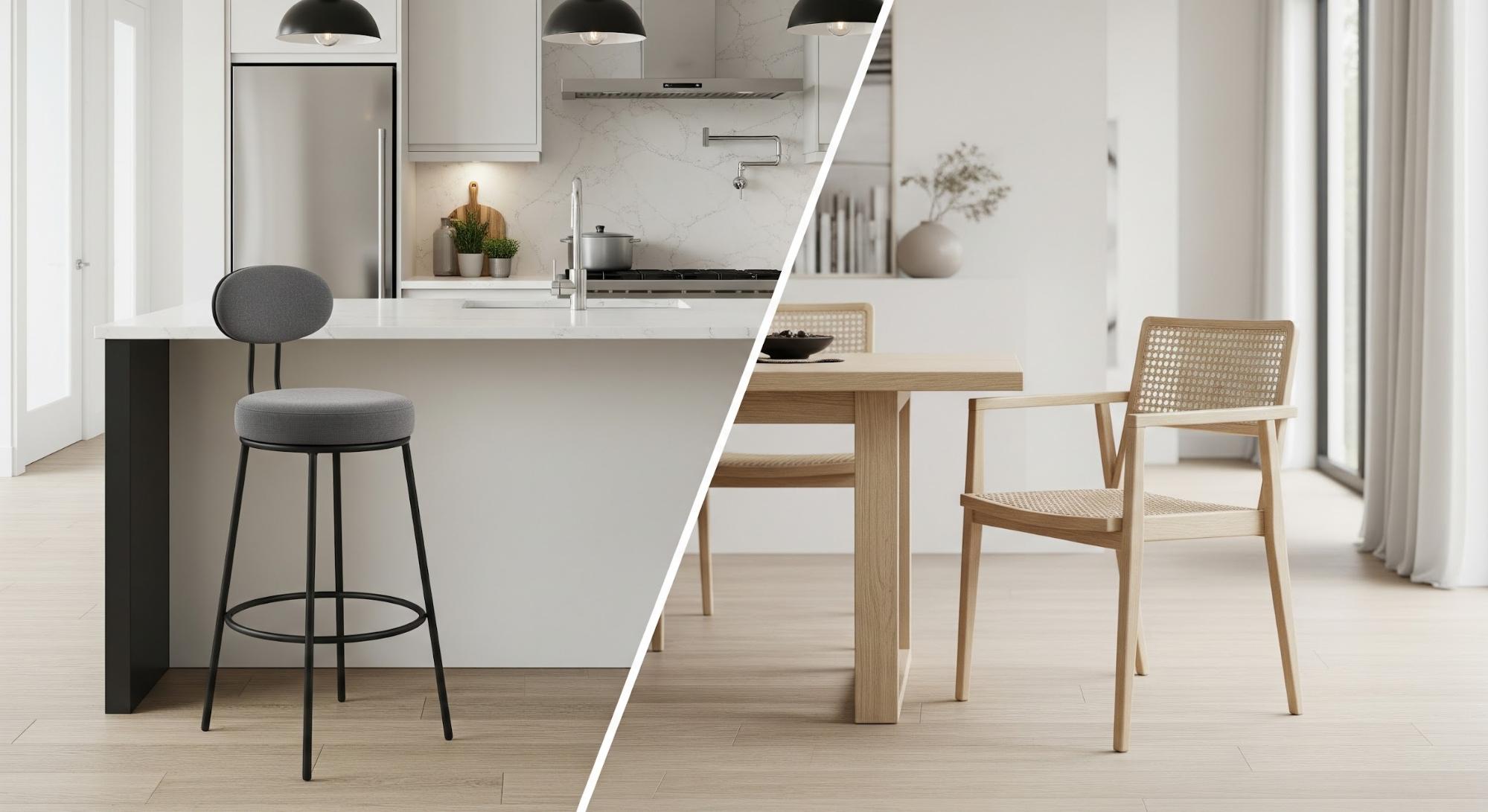
Bar stools create a more open, airy feel. Because they’re taller and often slimmer, they visually take up less space. Dining chairs, meanwhile, anchor a room and create a more formal setting.
When thinking about the best seating for small spaces, this difference matters a lot.
When to Choose Bar Stools Over Dining Chairs
There’s a reason modern homes lean toward stools, especially in open layouts.
Related: What You Need to Know When Buying a Bar Stool
Perfect for Kitchen Islands
Kitchen islands are designed for elevated seating. That’s where counter height bar stools shine. They slide neatly under the counter and keep the area streamlined.
Tip: Before buying stools for your kitchen island, be sure to measure both the counter height and the available legroom to ensure a comfortable fit.
Ideal for Small Condos and Apartments
In tighter homes, flexibility is key. Stools can be tucked completely under the counter when not in use. That alone makes them one of the best seating options for small spaces. They also double as extra seating when guests come over. Need more chairs for game night? Pull them out—and when you’re done, slide them back in.
For condo owners browsing bar stools in the Philippines, compact and backless styles are especially practical.
Great for Casual Living
If your home vibe is modern, industrial, or minimalist, stools blend in effortlessly. They feel relaxed and contemporary without making the dining area look too formal.
When to Choose Dining Chairs Over Bar Stools
While stools are trendy, dining chairs still have strong advantages.
Designed for Long Meals
Family dinners and holiday gatherings require comfort. Dining chairs are built for longer sitting sessions. Upholstery, padded seats, and supportive backs make a big difference.
Better for Formal Dining Areas
If you have a dedicated dining room, chairs create a balanced, grounded look. They frame the table and make the room feel complete.
Unlike stools, which are often used along one side of a counter, chairs surround the table and encourage conversation from every angle.
More Versatile in Placement
Dining chairs can move around the house more easily. You can pull one into your home office, use it in a bedroom corner, or bring it into the living area when needed.
Stools, due to their height, are more location-specific.
How to Choose Between Bar Stools and Dining Chairs
If you’re still unsure, here’s a practical way to decide.
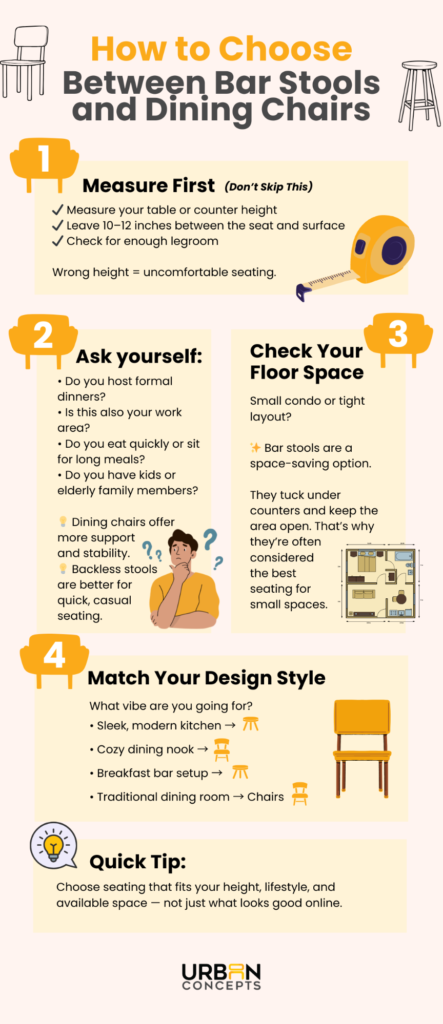
1. Measure First
This step cannot be skipped.
- Measure table or counter height
- Leave 10–12 inches between seat and surface
- Ensure there’s enough legroom
Choosing the wrong height is one of the biggest mistakes people make when comparing bar stools and dining chairs.
2. Consider Your Lifestyle
Ask yourself:
- Do you host formal dinners?
- Is your dining space also your work area?
- Do you eat quickly or linger at the table?
- Do you have kids or elderly family members?
Dining chairs tend to be safer and more stable for children and seniors. Stools without backs may not be ideal in those cases.
3. Evaluate Floor Space
If your home leans toward compact living, bar stools are a great space-saving choice. They help declutter the area visually and make it easier to move around.
That’s why many interior designers recommend stools as the best seating for small spaces, especially in studio units and condos.
4. Think About Aesthetic Goals
Are you aiming for:
- A sleek, modern kitchen?
- A cozy dining nook?
- A restaurant-style breakfast bar?
- A traditional dining room?
Your design direction will guide your seating choice.
Bar Stools vs Dining Chairs: Pros and Cons
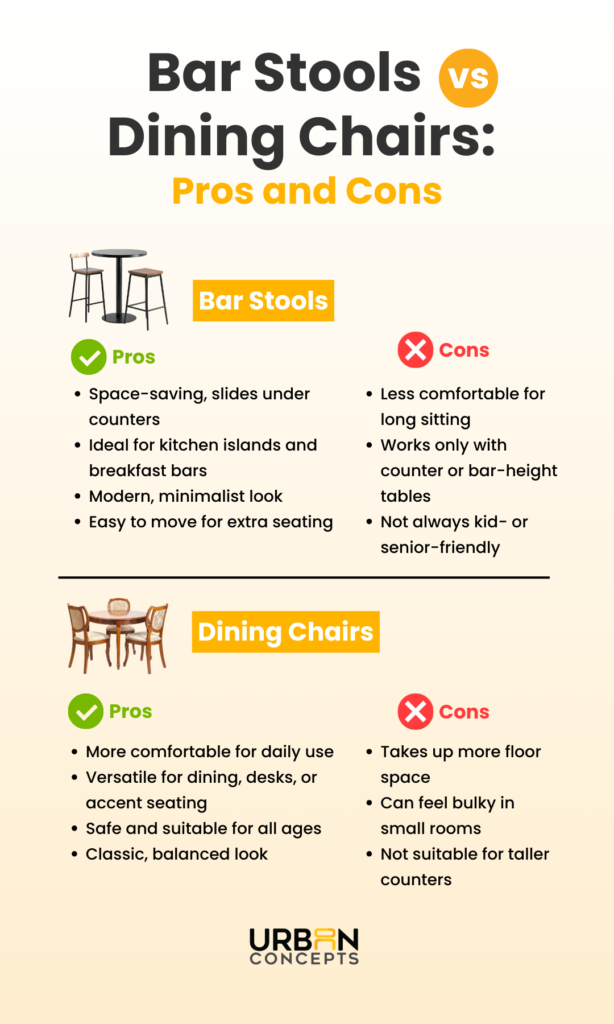
If you’re trying to decide between a bar stool or a dining chair, it can help to see everything laid out clearly. Here’s a straightforward breakdown to make the choice easier.
Bar Stools
Pros
- Great for compact areas – Stools can slide fully under counters, making them one of the best seating options for small spaces.
- Perfect for elevated surfaces – Ideal for kitchen islands and breakfast bars, especially when paired with properly sized counter height bar stools.
- Modern and minimalist appeal – They create a clean, open look that works well in contemporary homes.
- Flexible extra seating – Easy to move around when entertaining guests.
Cons
- Less supportive for long sitting – Backless or low-back designs may not be comfortable during extended meals.
- Height-specific – They only work with counters or bar-height tables, limiting placement options.
- Not always kid- or senior-friendly – Climbing up and down can be less stable compared to regular chairs.
Dining Chairs
Pros
- More comfortable for daily use – Designed with full back support, making them better for longer meals and gatherings.
- Versatile placement – Can be used at dining tables, desks, or even as accent seating in other areas of the home.
- Suitable for all ages – Easier and safer to sit on, especially for children and elderly family members.
- Balanced, classic look – They anchor a dining space and create a more traditional setup.
Cons
- Take up more floor space – They don’t tuck away as compactly as stools.
- Visually heavier – In tight layouts, they may make the area feel more crowded.
- Less ideal for kitchen islands – Standard dining chairs won’t align properly with taller counters.
Cost Considerations
Budget also plays a role in how to choose between bar stools and dining chairs.
Stools are often sold individually and can sometimes cost less per piece, especially minimalist models. However, premium counter height bar stools with upholstery and sturdy frames may cost just as much as dining chairs.
Dining chairs, particularly upholstered ones, can be an investment—but they usually offer long-term comfort.
When browsing affordable dining chairs or modern counter height bar stools, compare materials and build quality instead of focusing only on price.
Common Mistakes to Avoid
Even after understanding the difference between bar stools and dining chairs, people still make a few errors.
- Buying without measuring
- Ignoring seat depth
- Overcrowding the counter
- Choosing style over comfort
Spacing matters too. Leave about 6 inches between stools and around 24 inches per person at a dining table.
Bar Stools vs Dining Chairs: Which One Is Right for You?
There isn’t a one-size-fits-all answer when it comes to bar stools vs. dining chairs.
Choose bar stools if:
- You have a kitchen island or breakfast counter
- You’re furnishing a small condo
- You want a modern, open look
Choose dining chairs if:
- You have a traditional dining table
- Comfort is your top priority
- You host long dinners
And if your layout allows it? Use both.
The key is aligning your seating with how you actually live—not just how you want your space to look in photos.
Final Thoughts on Bar Stools vs Dining Chairs
At the end of the day, choosing the right seating comes down to height, comfort, available space, and your lifestyle. Understanding the differences between stools and chairs can help you avoid costly mistakes and select pieces that truly work for your home.
Whether you’re browsing for space-saving bar stools for condos or upgrading to modern dining chairs for family dinners, always measure carefully and think long-term.
The right seating doesn’t just fill a room—it supports everyday living.
If you’re ready to upgrade your setup, explore quality counter height bar stools and comfortable dining options designed specifically for Filipino homes. Your space deserves seating that looks good and feels right.
Upgrade your home with our selection—shop stylish and space-saving furniture in the Philippines for small condos and apartments, and find the perfect bar stools and dining chairs for your space!