How to Keep Furniture Looking New in Tropical Philippine Weather
Living in the Philippines comes with a unique set of considerations for furniture care. The tropical climate, with its high humidity, heavy rains, and strong sunlight, can affect both indoor and outdoor pieces. Wooden furniture, upholstered items, and metal accents all benefit from knowing how to maintain furniture in tropical climate conditions.
The good news? With a few simple habits and preventive steps, you can keep your furniture looking fresh, vibrant, and long-lasting. Here’s a practical guide filled with furniture care tips in the Philippines to help protect your investments.
What’s Inside
- How Tropical Weather Affects Your Furniture
- Good Habits to Keep Furniture Looking Fresh
- How to Protect Furniture from Humidity
- Caring for Your Outdoor Furniture
- Tips for Long-Lasting Wooden Furniture in Humid Weather
- Additional Tips for Furniture Durability
- Simple Lifestyle Habits to Help Your Furniture Last
- Conclusion: How to Keep Furniture Looking New in Tropical Philippines
How Tropical Weather Affects Your Furniture
Before diving into maintenance routines, it helps to know how the climate impacts different materials.
Humidity and Moisture
High humidity can cause wood to expand, warp, or even crack over time. It can also promote mold and mildew growth on fabrics and cushions. Metal furniture may develop rust if not properly treated.
Sunlight Exposure
Direct sunlight can fade colors, dry out wood, and make plastics brittle. Outdoor furniture, in particular, suffers from constant UV exposure.
Temperature Fluctuations
Even slight changes between day and night temperatures can stress furniture joints, especially in solid wood pieces.
Understanding these factors will guide you in applying tips for furniture durability in humid weather, keeping your home comfortable and stylish.
Good Habits to Keep Furniture Looking Fresh
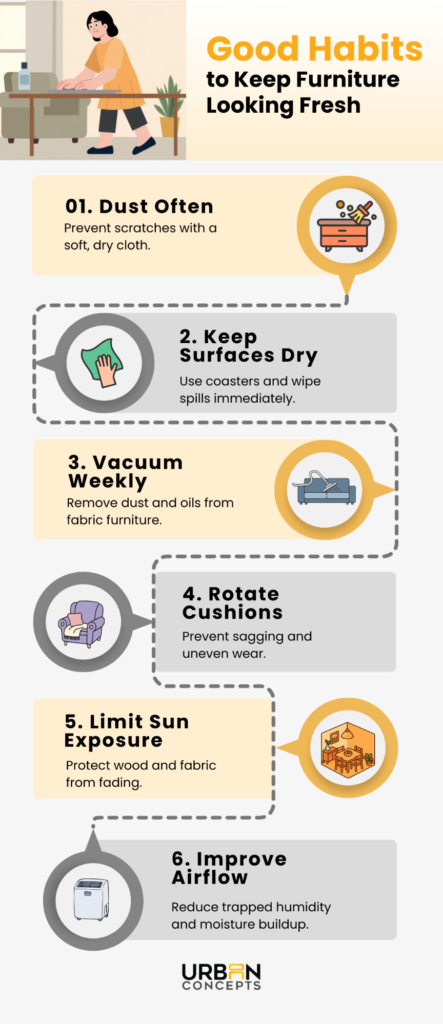
Consistency is key. A few simple routines can make a huge difference over time.
1. Dust and Clean Regularly
Dust and dirt act like tiny abrasives that slowly scratch surfaces. Wipe wooden tables and shelves with a soft, dry cloth several times a week. For deeper cleaning, use a slightly damp cloth with a mild, non-abrasive cleaner—then dry the surface immediately to prevent moisture buildup.
2. Avoid Excess Moisture
Never allow water to sit on furniture surfaces. Use coasters, placemats, and protective pads under drinks, vases, or décor. In a tropical climate, even small amounts of trapped moisture can cause wood to swell or finishes to bubble over time.
3. Vacuum Upholstery Weekly
Fabric sofas and chairs collect dust, sweat, and oils that weaken fibers. Vacuum at least once a week and spot-clean spills right away to prevent stains and odors from settling in.
4. Rotate Cushions and Pillows
Turn and rotate seat cushions regularly to prevent uneven wear and sagging. This helps maintain shape and extends the lifespan of upholstered furniture.
5. Limit Direct Sun Exposure
Harsh afternoon sunlight can fade fabrics and dry out wooden finishes. Adjust curtains or blinds during peak hours to protect your pieces from long-term sun damage.
6. Encourage Air Circulation
Proper airflow is essential when learning how to maintain furniture in tropical climate conditions. Use fans, open windows when possible, or place furniture slightly away from walls to reduce trapped humidity.
How to Protect Furniture from Humidity
Humidity is one of the biggest challenges for furniture in tropical climates, but with the right approach, it doesn’t have to damage your pieces. Taking simple, proactive steps helps protect furniture from humidity in the Philippines and keeps it looking fresh for years.
1. Use Dehumidifiers and Fans
Controlling indoor moisture is key. A small dehumidifier in rooms with wooden furniture or upholstered pieces helps slow mold growth and prevents wood from absorbing excess moisture. Fans can also circulate air, keeping spaces dry and fresh.
2. Apply Protective Coatings
For wooden furniture, a layer of polish, wax, or oil acts as a moisture barrier. Reapplying every few months not only preserves the shine but also strengthens the wood against the effects of high humidity.
3. Elevate Furniture Off the Floor
Wood and moisture don’t mix well. Keep furniture legs slightly raised with rubber pads, furniture risers, or small blocks to prevent moisture from seeping in during rainy seasons.
4. Use Moisture-Absorbing Products
Silica gel packs, moisture absorbers, or charcoal dehumidifiers can make a big difference in enclosed spaces like cabinets, drawers, or closets. They help maintain a balanced humidity level, reducing the risk of mold and mildew.
5. Allow Proper Ventilation
Keep windows and doors open whenever possible to improve airflow. Stagnant, humid air can accelerate damage, so allowing your furniture to “breathe” naturally helps it stay in good condition.
6. Avoid Placing Furniture Directly Against Walls
Walls can trap moisture, especially during the wet season. Leaving a small gap between furniture and walls encourages air circulation, keeping wooden pieces safe from warping or mold.
7. Choose Humidity-Resistant Materials
If you’re adding new furniture, consider woods like teak or mahogany, which naturally resist moisture. For metal furniture, look for powder-coated finishes to prevent rust and corrosion.
8. Maintain Your Air Conditioning or HVAC Systems
Air conditioners help regulate indoor humidity. Regularly check that filters are clean and drainage systems are working properly to prevent excess moisture from building up indoors.
9. Use Slipcovers or Protective Linens
For upholstered furniture, breathable covers can protect fabrics from humidity while allowing air circulation. This is especially helpful in living rooms or bedrooms where moisture can settle on cushions.
Caring for Your Outdoor Furniture
Outdoor spaces are beautiful but tough on furniture. Rain, sun, and dust can wear down surfaces quickly.
Related: Keeping Outdoor Furniture in Top Shape: Maintenance Tips for Durability
1. Choose Weather-Resistant Materials
Opt for treated wood, synthetic rattan, or powder-coated metals. These materials are designed to withstand tropical conditions without deteriorating quickly.
Related: Patio Furniture for All-Weather Conditions: Materials and Factors to Consider
2. Use Covers and Storage
Invest in high-quality furniture covers or store items indoors during the wet season. Even simple tarpaulin covers can prevent water damage and UV fading.
3. Position Strategically
Place furniture under shade or a covered patio. Direct sunlight can bleach colors and weaken structural integrity over time.
Tips for Long-Lasting Wooden Furniture in Humid Weather
Wooden furniture is a staple in Filipino homes but requires extra care.
1. Maintain Humidity Balance
Wood reacts to moisture, so maintain indoor humidity levels ideally between 40–60%. Avoid placing wood near air conditioners or humidifiers that drastically change air moisture.
Related: How to Protect Wooden Furniture from Humidity in the Philippines
2. Regular Polishing
Polish or wax wood surfaces at least once every three months. This not only adds shine, but also forms a protective layer against moisture and dust.
3. Immediate Spill Management
Wipe spills instantly. Water, coffee, or juice left on wood can leave stains or cause long-term damage.
Additional Tips for Furniture Durability
Long-term durability comes down to a combination of proper material choice, placement, and upkeep.
- Rotate Cushions and Mattresses: This ensures even wear and prevents sagging in high-traffic areas.
- Tighten Loose Joints: Check screws and joints regularly. Humidity can loosen fittings over time.
- Mind the Sun: Move delicate items like wicker, cane, or certain plastics out of direct sunlight.
Simple Lifestyle Habits to Help Your Furniture Last
Sometimes, small lifestyle changes can make a big impact on furniture lifespan:
- Limit Food and Drinks Near Furniture: Spills are inevitable, so keep dining activities away from fabric-covered or wooden furniture.
- Use Rugs and Mats: These protect floor-standing furniture from direct contact with moisture and dust.
- Regularly Inspect for Pests: Termites and wood-boring insects can thrive in humid climates. Routine inspections prevent expensive damage.
Conclusion: How to Keep Furniture Looking New in Tropical Philippines
Keeping your furniture looking new in the tropical Philippines doesn’t have to be complicated. By following these furniture care tips in the Philippines, regularly protecting pieces from humidity, and taking preventive steps for both indoor and outdoor furniture, you can extend the life and beauty of your home furnishings.
Remember, from wooden dining sets and upholstered sofas to outdoor rattan chairs, consistent care and smart placement make all the difference. Start small, stay consistent, and your furniture will thank you for years to come.
Make furniture care simple and keep your home looking vibrant—explore quality home furniture in the Philippines today.