Round vs. Rectangular Dining Tables: Key Differences and How to Choose
Picking a dining table might seem simple, but it actually plays a huge role in how your space functions and feels every day. From how comfortable meals are to how easily people move around the room, the shape you choose makes a real difference. If you’re stuck deciding between a round vs rectangular dining table, the best choice often depends on your room size, layout, lifestyle, and seating needs.
In general, round tables work best for compact areas and casual conversations, while rectangular tables are ideal for larger spaces and bigger households. However, there’s more to consider before making a final decision.
This guide breaks down the key differences between the two shapes, their pros and cons, and practical tips on how to choose a dining table that fits your home perfectly.
Key Takeaway: Round vs. Rectangular Dining Tables
- Choose Round For: Small or square rooms and intimate groups (2–4 people). The cornerless design saves space, improves flow, and encourages conversation.
- Choose Rectangular For: Large families, frequent hosting, or long, narrow rooms. This shape maximizes seating capacity and fits formal layouts perfectly.
- The Golden Rule: Leave at least 36 inches of clearance between the table and walls to ensure comfortable movement and seating.
What’s Inside
- Round vs. Rectangular Dining Table: What’s the Real Difference?
- Quick Comparison: Round vs. Rectangular Dining Table
- Best Dining Table Shape for Different Lifestyles
- Which Dining Table Shape Saves More Space?
- How to Choose a Dining Table Based on Room Size
- Dining Table Space and Size Guide
- Final Thoughts: Choosing Between Round vs. Rectangular Dining Tables
- Frequently Asked Questions About Round vs. Rectangular Dining Tables
Round vs. Rectangular Dining Table: What’s the Real Difference?
At first glance, it may seem like it’s just about shape, but it actually changes how your dining space feels and functions.
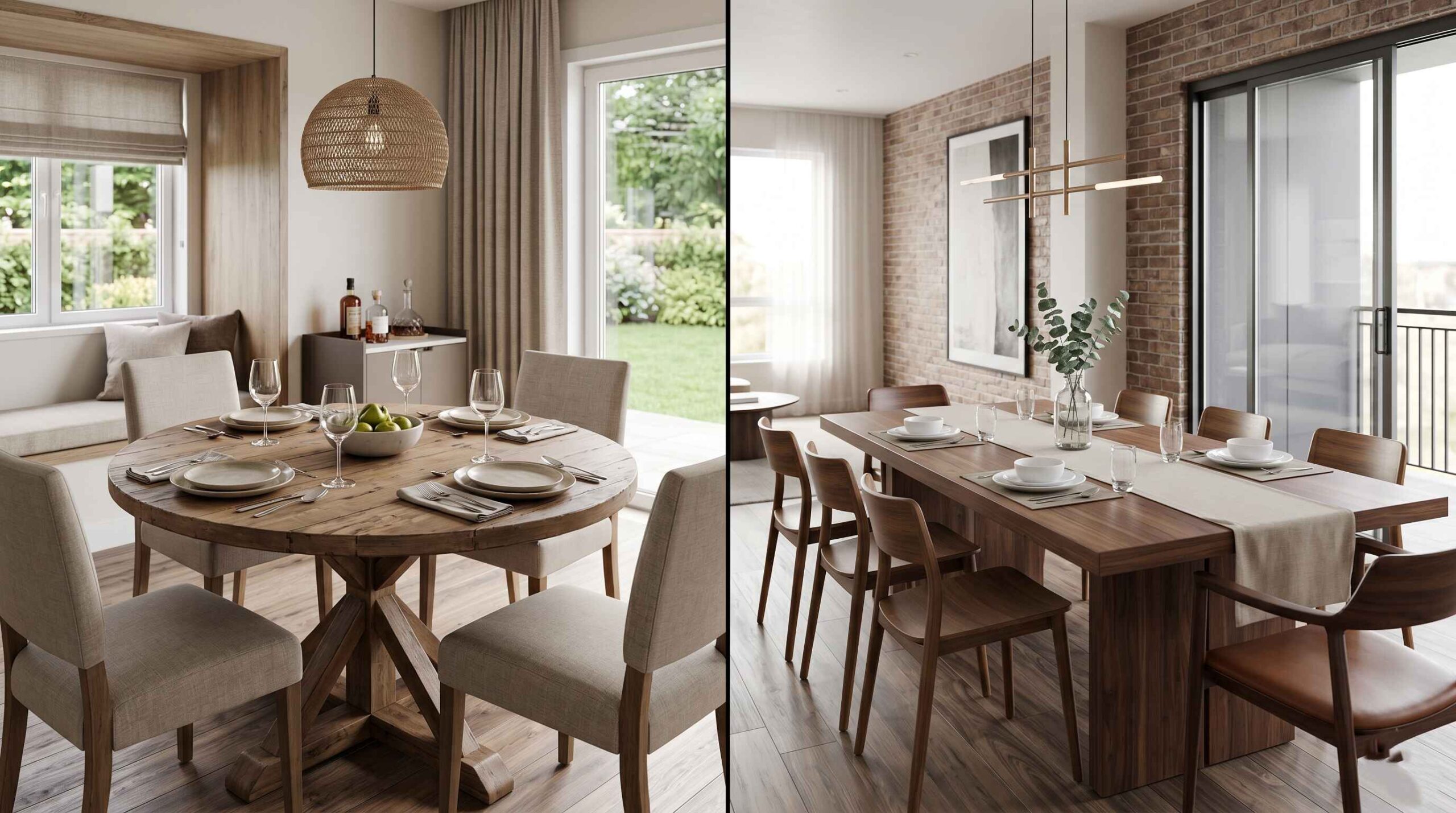
A round table creates a softer, more open setup that naturally encourages conversation and removes the idea of a “head of the table,” making everyone feel equally included.
A rectangular table, on the other hand, feels more structured and defined. It works well with traditional layouts and often provides more seating, especially in longer spaces.
When comparing the two, it helps to think of them this way:
- Round = social, flexible, space-friendly
- Rectangular = structured, spacious, practical
Both work well—it really depends on your space and how you use it.
Quick Comparison: Round vs. Rectangular Dining Table
| Feature | Round Dining Table | Rectangular Dining Table |
|---|---|---|
| Overall Feel | Soft, open, casual | Structured, formal, defined |
| Social Interaction | Encourages equal conversation | More directional seating |
| Space Efficiency | Ideal for small or tight areas | Best for long or large rooms |
| Seating Capacity | Better for small groups | Better for larger families |
| Room Fit | Works well in square rooms | Fits rectangular rooms better |
Best Dining Table Shape for Different Lifestyles
Different lifestyles call for different dining table shapes. Here’s a quick guide to help you choose what works best for your everyday needs and space.
For Families
Rectangular tables are often better for larger families because they offer more seating and surface space.
For Couples or Small Households
Round tables create a more relaxed and intimate setup that works well for smaller groups.
For Frequent Entertainers
Expandable rectangular tables provide flexibility for hosting guests during holidays or celebrations.
For Condo Living
Round tables are usually more practical in condos because they help maximize limited floor space.
Which Dining Table Shape Saves More Space?
If you’re trying to make a small dining area feel bigger, the shape of your table really matters. Between a round vs rectangular dining table, one will usually help your space feel more open and easier to move around in.
Let’s break it down in a simple way.
Round Tables: Better for Small, Tight Spaces
Round tables are usually the go-to choice when space is limited.
Why? Because they don’t have corners.
That small detail actually makes a big difference. You can walk around them more easily, and the room feels less “boxed in.”
This is why many people searching for a round or rectangle table for a small room end up choosing round designs.
They also help with:
- Making small rooms feel more open
- Improving movement around the dining area
- Fitting into corners or awkward layouts
- Creating a lighter, less crowded feel
If your goal is simple space-saving dining table ideas, a round table is often the safest and most practical choice.
Rectangular Tables: Better for Bigger or Narrow Rooms
Rectangular tables are still very practical—they just work differently.
They fit naturally in long or narrow dining rooms and align well with most architectural layouts.
However, in smaller spaces, they can feel tighter because of the corners. You’ll also need more clearance around them to maintain comfortable movement.
The advantages include:
- More seating capacity
- Better fit for long dining rooms
- Ideal for family meals and gatherings
- Easier to pair with bench seating or extensions
So while they may not always feel “space-saving,” they are highly efficient in terms of function.
So, Which One Saves More Space?
In simple terms:
- Round dining tables = better for small spaces and smooth movement
- Rectangular dining tables = better for seating and structured layouts
If your priority is making a small room feel open and breathable, round tables usually win. But if your focus is maximizing seating in a defined dining area, rectangular tables make more sense.
How to Choose a Dining Table Based on Room Size
Small Dining Areas
If your space is limited, a round table is usually the smarter choice.
A compact round table:
- Improves movement
- Reduces visual clutter
- Fits tighter corners
- Makes the room feel more open
For homeowners searching for space-saving dining table ideas, pedestal round tables are especially useful because they remove bulky table legs and allow more flexible seating.
Medium-Sized Rooms
Both shapes can work well in medium-sized areas.
Your choice should depend more on:
- Household size
- Dining habits
- Interior style
- Entertaining needs
If you host guests regularly, a rectangular table may be more practical. If you prefer a relaxed and casual setup, round tables often feel more inviting.
Large Dining Rooms
Large dining spaces typically benefit more from rectangular tables because they help fill the room proportionally.
A small round table in a spacious dining room can sometimes look undersized or disconnected from the layout.
Dining Table Space and Size Guide
Choosing the right dining table is not just about style—it’s also about making sure it fits comfortably within your space. A well-sized table can improve movement, seating comfort, and the overall flow of the room.
1. Leave enough room for movement
To keep the dining area comfortable and easy to navigate, leave enough clearance around the table.
Here are the recommended spacing guidelines:
- At least 36 inches between the table and walls or nearby furniture
- Around 48 inches in high-traffic areas for smoother movement
This helps prevent the space from feeling cramped, especially in smaller homes or condos.
2. Match the table shape with your room layout
The shape of your room can help determine which table works best visually and functionally.
- Square rooms → round tables usually feel more balanced and open
- Rectangular rooms → rectangular tables often fit more naturally and efficiently
Choosing a shape that complements your layout can make the entire dining area feel more cohesive.
3. Choose the right size and seating capacity
Table dimensions directly affect comfort and functionality. Here’s a simple seating guide:
- 36–48 inch round table → seats about 4–6 people
- 60 inch round table → seats about 8–10 people
- 72 inch rectangular table → seats about 10–12 people
Instead of maximizing seating, focus on maintaining enough personal space and movement around the table.
4. Avoid overcrowding the room
A table that’s too large can make the dining area feel tight and difficult to move around in. In many cases, choosing a slightly smaller table creates a more comfortable and visually balanced space.
The best dining setup is one that allows people to sit, move, and gather comfortably without making the room feel restricted.
Related: How to Arrange Furniture to Make a Small Room Look Bigger
Final Thoughts: Choosing Between Round vs. Rectangular Dining Tables
There’s no universal winner in the round vs. rectangular dining table debate. The right choice depends on how you use your space and what matters more—comfort, seating, or flow.
If you want a cozy, space-saving setup, go round. If you need structure and capacity, go rectangular. The best dining table shape is always the one that fits your lifestyle—not just your floor plan.
Frequently Asked Questions About Round vs. Rectangular Dining Tables
1. Which is better, a round or rectangular dining table?
It depends on your space. Round tables are better for small rooms and conversation flow, while rectangular tables are better for seating more people and larger dining areas.
2. What dining table shape is best for small spaces?
A round dining table is usually the best choice for small spaces because it saves space, improves movement, and makes the room feel more open.
3. Is a rectangular dining table good for small rooms?
It can work, but it depends on the layout. A slim rectangular table may fit, but corners can make tight spaces feel more crowded compared to round tables.
4. What is the most space-saving dining table shape?
Round tables are generally more space-saving because they don’t have corners and allow easier movement around them.
5. How do I choose the right dining table size?
Measure your space first and leave at least 36 inches of clearance around the table. Then choose a size that matches your seating needs without blocking movement.
6. Which dining table is better for families?
Rectangular tables are usually better for families because they offer more seating and surface space for meals and activities.
Looking for a dining table for your home? Discover modern home furniture in the Philippines for every space and find pieces that fit your style.