Solid Wood vs. Engineered Wood: Which Furniture Should You Choose?
Choosing furniture isn’t just about style—it’s about how long it lasts, how it performs in your space, and whether it’s worth your money in the long run. One of the most common questions people ask when shopping is: solid wood vs engineered wood furniture—which one is better?
The honest answer? It depends on your needs, budget, and lifestyle.
In this guide, we’ll break down the difference between solid wood and engineered wood furniture, compare durability, cost, appearance, and help you decide which one actually makes sense for your home or office.
Quick Answer: Which One Should You Choose?
If you want a simple, upfront answer to guide your shopping trip:
- Choose solid wood furniture if you want long-lasting, premium, and naturally beautiful pieces that can last decades and serve as heirlooms.
- Choose engineered wood furniture if you want affordable, modern, and practical furniture for everyday use, especially in rentals or offices.
Both have their strengths—there’s no universal best wood for furniture, only what’s best for your specific situation.
What’s Inside
- What Is Solid Wood Furniture?
- What Is Engineered Wood Furniture?
- Solid Wood vs Engineered Wood Furniture: Key Differences
- Types of Wood Furniture You Should Know
- Is Solid Wood Better Than Engineered Wood for Furniture?
- Which Is More Durable for the Philippine Climate?
- Furniture Buying in the Philippines: What You Should Know
- Final Verdict: Which Furniture Should You Choose?
- Frequently Asked Questions (FAQ)
What Is Solid Wood Furniture?
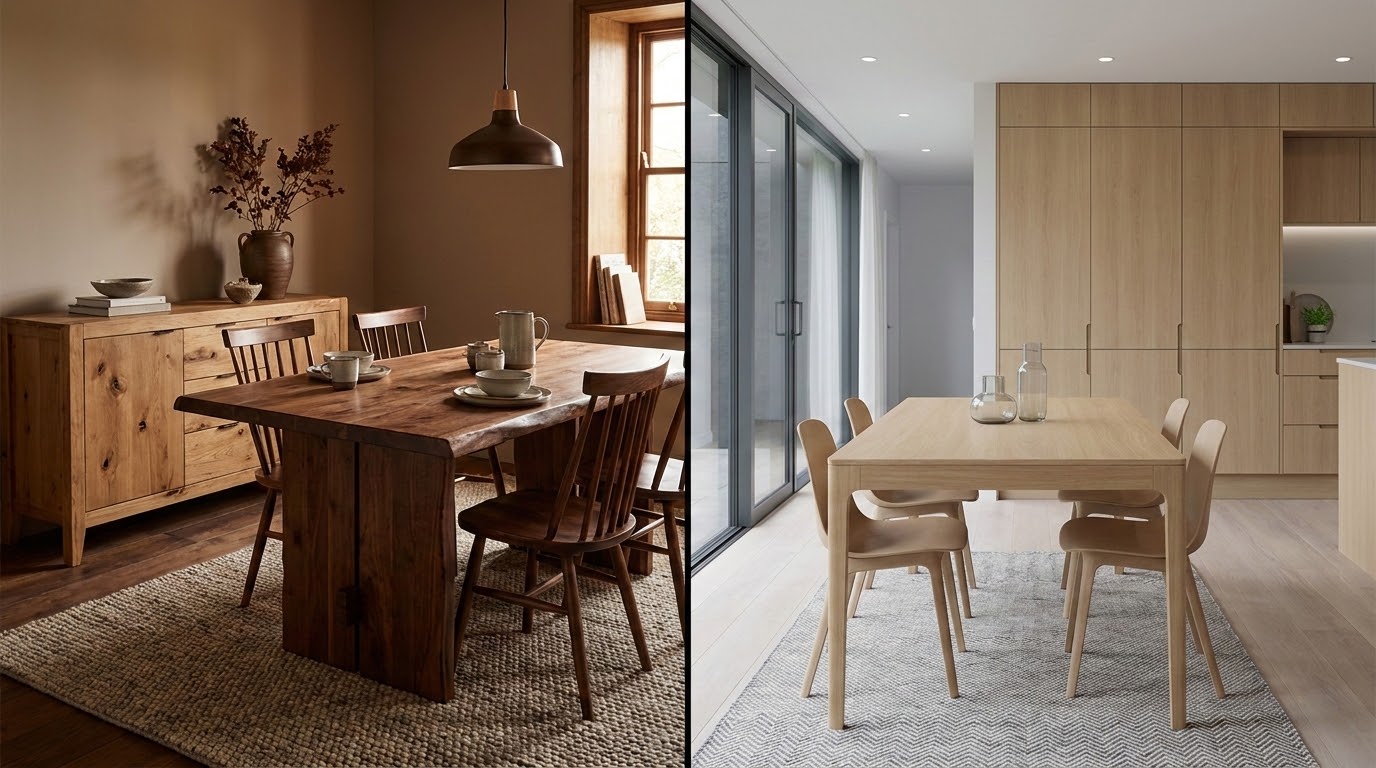
Solid wood furniture is made from 100% natural timber—no layers, no bonding, no fillers. Think oak, mahogany, teak, walnut, and acacia.
When people talk about “classic, premium furniture,” they’re usually referring to solid wood.
Related: Solid Wood Furniture and Its Timeless Appeal: Why It Never Goes Out of Style
Key Benefits of Solid Wood Furniture
- Extremely durable and long-lasting
- Unique grain patterns (no two pieces alike)
- Can be repaired and refinished
- Adds premium value to interiors
Many homeowners invest in solid wood furniture for pieces like dining tables, bed frames, and cabinets.
Related: 6 Practical Benefits of Buying Solid Wood Furniture for Your Home
What Is Engineered Wood Furniture?
Engineered wood is a type of manufactured wood made by combining wood fibers, particles, or veneers with adhesives and pressing them into sheets or boards.
Related: Types of Manufactured Wood
Engineered Wood Furniture Advantages
- More affordable than solid wood
- Lightweight and easy to move
- Ideal for modular and modern designs
- More consistent in appearance
Solid Wood vs Engineered Wood Furniture: Key Differences
If you want a quick breakdown, here’s a side-by-side solid wood vs engineered wood furniture comparison:
| FEATURE | SOLID WOOD FURNITURE | ENGINEERED WOOD FURNITURE |
|---|---|---|
| Longevity | Can last 100+ years | Typically 5–20 years |
| Price | Expensive upfront | Budget-friendly |
| Repairability | High (can be sanded/refinished) | Low (damaged veneer is tricky) |
| Weight | Very heavy | Generally lighter |
| Humidity Resistance | Prone to warping/shrinking | Highly stable |
| Maintenance | Needs occasional oiling/waxing | Simple wipe-down |
Types of Wood Furniture You Should Know
Understanding the types of wood furniture helps you make smarter decisions.
Solid Wood Types
- Teak – moisture-resistant, ideal for PH climate
- Mahogany – durable and premium-looking
- Oak – strong and classic
- Walnut – rich, high-end finish
Engineered Wood Types
- Plywood – best overall engineered option
- MDF – smooth but moisture-sensitive
- Particle board – budget option for light use
Is Solid Wood Better Than Engineered Wood for Furniture?
The short answer? It depends on your priorities. If you are looking for a piece of furniture that your grandkids will fight over in the will, solid wood is the winner. If you want a stylish, budget-friendly bookshelf for your first apartment, engineered wood might be your best friend.
The Charm of Authenticity
There is an undeniable “soul” to solid wood. Because it’s a natural product, no two pieces are exactly alike. You get unique knots, grain patterns, and textures that manufactured materials just can’t replicate perfectly. It has a tactile warmth that makes a house feel like a home.
The Practicality of Engineering
On the flip side, engineered wood was designed to solve some of the natural “flaws” of real timber. Real wood breathes—it expands and contracts with humidity. Engineered wood is much more stable in varying temperatures. This makes it a fantastic choice for kitchen cabinets or bathroom vanities where moisture levels fluctuate.
Which Is More Durable for the Philippine Climate?
In the solid wood vs engineered wood durability debate, the Philippine climate is an important factor.
The Philippines has high humidity, which can affect both materials in different ways.
Solid wood can expand when exposed to moisture, which may lead to slight warping or stuck drawers if the wood wasn’t properly kiln-dried.
On the other hand, low-quality engineered wood like particle boards can swell or bubble when exposed to water or high humidity.
For better long-term durability in tropical conditions, solid teak or high-grade marine plywood are usually the most reliable options.
Furniture Buying in the Philippines: What You Should Know
If you’re choosing between solid wood vs engineered wood furniture in the Philippines, your decision shouldn’t be based on design alone. Local climate and living conditions matter just as much.
Humidity and Weather Conditions
The Philippines has a hot and humid climate year-round, which affects furniture performance:
- Solid wood furniture can expand or contract due to moisture. If not properly kiln-dried, it may cause slight warping or tight joints.
- Engineered wood furniture (especially particle board) can swell, bubble, or weaken when exposed to high humidity or water.
Related: How to Protect Wooden Furniture from Humidity in the Philippines
Final Verdict: Which Furniture Should You Choose?
This isn’t really a “which is better” situation—it’s more about what works for your home, budget, and how you actually use your space.
If you want furniture that lasts for years, feels premium, and can even become a long-term investment piece, solid wood is the better fit. It’s ideal for items you don’t plan to replace often.
If you’re looking for something more budget-friendly, easier to move, and suited for flexible or modern living setups, engineered wood is usually the more practical choice.
In the end, the right decision comes down to balance—durability on one side, and convenience and cost on the other.
Frequently Asked Questions (FAQ)
Is solid wood better than engineered wood for furniture?
Solid wood is generally more durable and long-lasting, but engineered wood is more affordable and practical for everyday or budget-conscious use. The better choice depends on your needs and budget.
Engineered wood vs solid wood— which is more durable?
Solid wood is typically more durable and can last for decades if maintained properly. However, high-quality engineered wood (like plywood) can still perform well for moderate use.
What is the difference between solid wood and engineered wood furniture?
Solid wood is made from natural timber, while engineered wood is made by bonding wood particles or fibers with adhesives. Solid wood is stronger and more premium, while engineered wood is more cost-efficient.
Is engineered wood good for long-term use?
Yes, but it depends on quality and usage. Engineered wood is best for furniture that is not exposed to heavy moisture or constant heavy loads.
Find the best home furniture in the Philippines for your space and budget—shop smart and choose pieces that truly last in your home.