
How to Protect Wooden Furniture from Humidity in the Philippines
Wooden furniture gives any home a cozy, timeless charm — but if you live in the Philippines, you know that our tropical humidity isn’t exactly wood’s best friend. Between the heat, rain, and ever-changing weather, even high-quality pieces can warp, swell, or crack over time. The good news? With the right care, you can keep your wooden furniture looking beautiful and sturdy for years.
Whether you’re dealing with heirloom pieces or modern home furniture in the Philippines, here’s a complete guide on how to protect wooden furniture from humidity — without needing to spend a fortune.
What’s Inside
- Why Humidity Is Wood’s Worst Enemy
- Choose the Right Type of Wood
- Apply Wood Sealants or Varnish
- Keep Furniture Away from Moisture Sources
- Use a Dehumidifier or Air Conditioner
- Regularly Clean and Polish Your Wood Furniture
- Use Furniture Covers During the Rainy Season
- Elevate Your Furniture
- Inspect Regularly for Signs of Damage
- Consider Using Silica Gel or Charcoal Bags
- Know When to Call a Professional
- FAQs on Protecting Wooden Furniture in the Philippines
- Key Takeaways on Maintaining Wooden Furniture in Humid Climates
Why Humidity Is Wood’s Worst Enemy
Humidity simply means moisture in the air. The higher the humidity, the more moisture wood absorbs. Since wood is porous, it naturally expands when it absorbs moisture and contracts when it dries.
In a humid climate like the Philippines, this constant expansion and contraction can lead to problems like:
- Warping or swelling — surfaces that lose their flatness
- Cracking — when wood dries too fast after absorbing moisture
- Loose joints — from the constant shrinking and swelling
- Mold and mildew growth — especially during the rainy season
If left unchecked, your furniture might not just lose its aesthetic appeal — it could literally fall apart.
1. Choose the Right Type of Wood
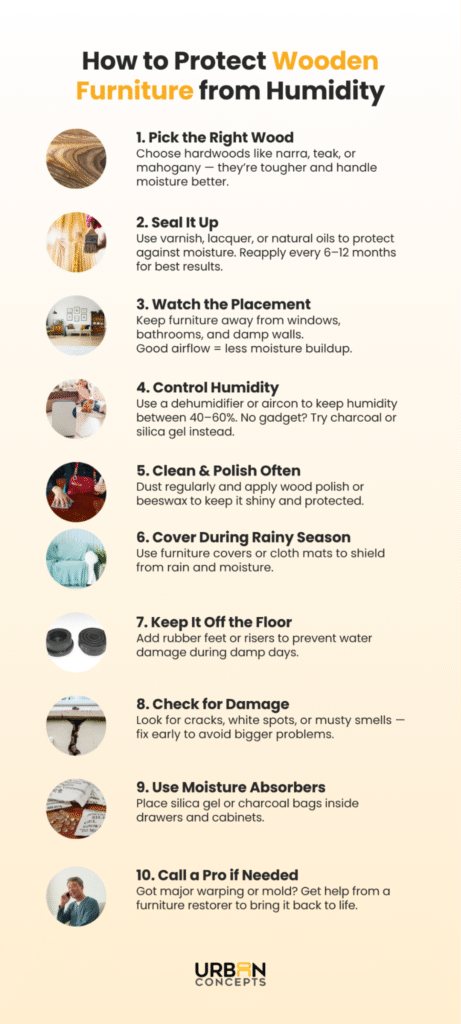
Not all wood is made equal when it comes to humidity resistance. If you’re buying new furniture, opt for hardwoods such as narra, mahogany, teak, or cherry, which handle moisture better than softwoods like pine.
These dense woods are less likely to absorb too much water and are often used for wooden furniture in humid climates. Teak, for example, contains natural oils that make it more resistant to moisture and rot — a great choice for home furniture in the Philippines.
2. Apply Wood Sealants or Varnish
One of the best ways to protect wooden furniture in humid climates is by creating a barrier between the wood and the air.
A good-quality wood sealant, varnish, or lacquer can do wonders. These products form a thin, protective film over the wood, preventing it from soaking up moisture.
Pro tip:
- Reapply sealants or varnish every 6–12 months, especially if the furniture is near windows or doors where humidity changes frequently.
- Use a matte or semi-gloss finish if you want to keep the wood’s natural look while still protecting it.
If you’re more into DIY, natural oils like linseed oil or tung oil are great eco-friendly alternatives for wooden furniture maintenance in the Philippines.
3. Keep Furniture Away from Moisture Sources
This might sound simple, but placement matters a lot. Avoid putting wooden pieces near:
- Windows and doors that let in humid air or rain
- Bathrooms or kitchens where steam builds up
- Walls that get damp during the rainy season
If you can, move your furniture a few inches away from walls to let air circulate around it. For wooden furniture in humid climates, airflow is your secret weapon against moisture buildup.
4. Use a Dehumidifier or Air Conditioner
When it comes to how to maintain wooden furniture in the Philippines, controlling your indoor humidity level is key.
A dehumidifier helps reduce excess moisture in the air — especially during the rainy season when everything feels sticky. Alternatively, running an air conditioner also helps maintain a consistent environment.
Aim for a humidity level between 40% to 60%. Anything higher, and your wood starts to absorb moisture. Anything lower, and it could dry out too quickly.
If buying a dehumidifier feels too much, even a few charcoal or silica gel packets placed near your furniture can make a difference. However, this
5. Regularly Clean and Polish Your Wood Furniture
Keeping your furniture clean not only maintains its beauty but also protects it from humidity-related damage.
Use a soft, dry cloth to remove dust regularly. Avoid wet rags — moisture is exactly what we’re trying to avoid! Once a month, apply a wood polish or conditioner to keep the surface hydrated and protected.
Products with beeswax or natural oils help create a moisture-resistant barrier and keep your furniture shiny.
Avoid:
- Chemical-heavy cleaners that strip away protective coatings
- Spraying directly onto the surface — spray on a cloth instead
These tips to prevent wood damage from humidity in the Philippines might sound small, but they go a long way in keeping your furniture in top shape.
6. Use Furniture Covers During the Rainy Season
The rainy months are the biggest challenge for home furniture in the Philippines. When humidity is at its peak, even well-sealed pieces can suffer.
Consider using furniture covers for wooden items that aren’t used daily. If you have patio or outdoor furniture, make sure to store them indoors when heavy rain is expected.
Related: 5 Tips for Selecting Durable and Weather-Resistant Outdoor Furniture in the Philippines
For indoor pieces, placing cloth mats or runners can protect tabletops from accidental spills or condensation from cold drinks.
7. Elevate Your Furniture
If you live in flood-prone or damp areas, raise your furniture slightly off the floor using felt pads, risers, or rubber feet. This helps prevent water from seeping into the legs during rainy days and allows better air circulation underneath. It’s a small detail that can prevent a lot of headaches later on — especially for solid wood pieces.
8. Inspect Regularly for Signs of Damage
Even with the best care, wood reacts to its environment. That’s why regular inspections matter. Look out for:
- Tiny cracks or separations between joints
- White spots (a sign of moisture trapped under the finish)
- Musty odors (a possible mold issue)
9. Consider Using Silica Gel or Charcoal Bags
Simple household solutions can help control humidity naturally. Silica gel packs, bamboo charcoal bags, or moisture absorbers can be placed inside drawers, cabinets, or wardrobes.
They help keep enclosed spaces dry — perfect for protecting wooden cabinets, dressers, or wardrobes that tend to trap moisture.
This small hack is often overlooked but is one of the most effective tips to prevent wood damage from humidity in the Philippines.
If you catch these early, you can refinish, reseal, or treat the piece before it worsens. Consistent wooden furniture maintenance means solving small issues before they become major repairs.
10. Know When to Call a Professional
If your wooden furniture already shows severe warping, cracking, or mold, it might be time to call in a professional furniture restorer. They can strip, treat, and reseal the wood properly to bring it back to life.
While DIY maintenance works for prevention, restoration requires expertise — especially for valuable or antique pieces.
FAQs on Protecting Wooden Furniture in the Philippines
1. What’s the best way to protect wooden furniture in humid climates?
Use sealants, keep indoor humidity between 40–60%, and avoid placing wooden furniture near moisture sources. Regular cleaning and applying polish or wax also help maintain the protective coating.
2. How do I maintain wooden furniture in the Philippines?
Regular dusting, applying a protective finish, using dehumidifiers, and keeping furniture away from direct sunlight and moisture are key for long-lasting beauty.
3. Can humidity permanently damage wood furniture?
Yes. Prolonged exposure to moisture can cause swelling, cracking, and mold growth. However, with proper care, you can prevent permanent damage.
4. How often should I reapply varnish or sealant?
Reapply varnish or sealant based on product type, location, and wear. For outdoor or high-use furniture, do it every 1–2 years. For indoor, low-wear pieces, every 3–7 years is enough.
In humid areas, check every 6–12 months. Look for fading, dryness, or cracking — signs it’s time to recoat.
Key Takeaways on Maintaining Wooden Furniture in Humid Climates
Living in a tropical country means dealing with humidity is unavoidable — but wood care doesn’t have to be complicated. With a bit of preventive maintenance, smart placement, and regular inspection, you can easily extend the life of your furniture.
Now that you know how to protect wooden furniture from humidity, take the time to apply these simple steps. Your furniture and your wallet will thank you later.
Whether you’re shopping for new pieces or maintaining your old favorites, remember that the best way to protect wooden furniture in humid climates is to stay consistent with care.
Check out durable home furniture in the Philippines and upgrade your space today!
Like our Facebook page and follow us on our Instagram to keep in touch with us regularly.